


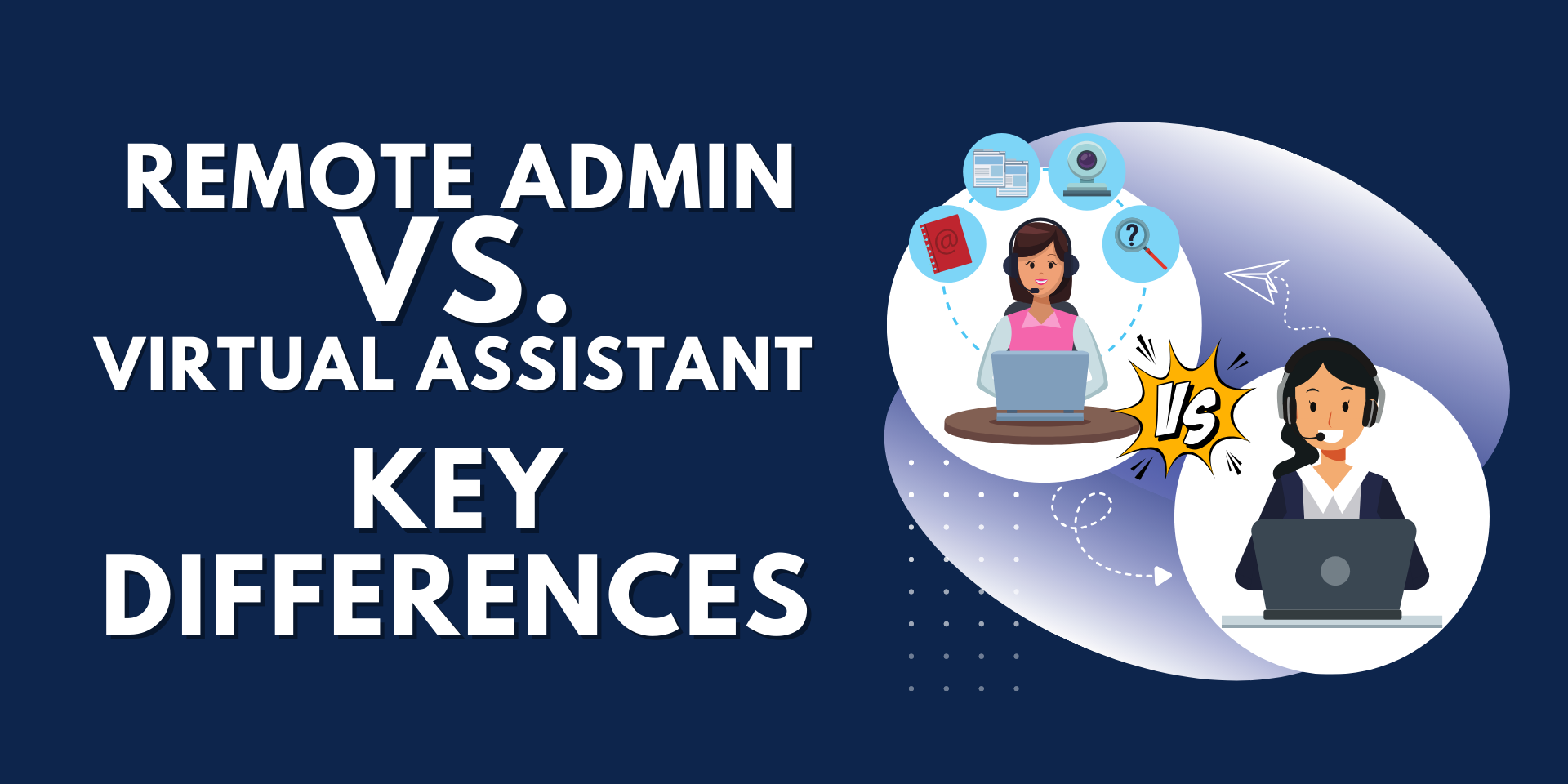
If you’ve ever looked into outsourcing help for your business, you’ve probably come across two common terms: Remote Administrative Assistant (RAA) and Virtual Assistant (VA).
At first glance, they sound like the same thing, and to be fair, they do share a lot of similarities. Both work remotely, both support your business, and both save you time. But there are some key differences, and knowing them can help you choose the right type of support for your business needs.
Let’s break it down in a simple, straightforward way.
What Is a Virtual Assistant (VA)?
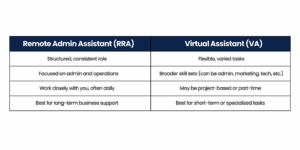
A virtual assistant is a flexible professional who can take on a wide range of tasks, depending on their skills. Think of them as a “general helper” who adapts to what you need.
Examples of VA tasks include but not limited to:
- Social media posting and engagement
- Basic bookkeeping support
- Customer service responses
- Research projects
- Email and calendar management
Key trait: VAs often have diverse skill sets and may specialize in certain areas (like marketing, tech support, or content creation).
Best for: Business owners who need flexible, varied support on a project basis or part-time.
What Is a Remote Administrative Assistant (RAA)?
A remote administrative assistant is more like a dedicated, behind-the-scenes teammate focused on the operational and organizational side of your business. Their role is structured and consistent, often resembling that of an in-office administrative assistant, just virtual.
Examples of RAA tasks include:
- Managing calendars and appointments
- Coordinating meetings and travel
- Preparing reports and documents
- Handling emails and correspondence
- Maintaining organized systems (files, data, CRM)
Key trait: RAAs usually work more closely with you day-to-day, providing consistency, reliability, and long-term support.
Best for: Small businesses, startups, or solopreneurs who need steady, ongoing help to keep operations running smoothly.
The Main Differences at a Glance
Here’s a quick side-by-side comparison: