What is a Virtual Assistant?
A virtual assistant (VA) is a remote professional who provides specialized services to business owners and companies. Despite working from a different location, they leverage cloud-based technology and electronic resources to perform their duties with the same—if not higher—efficiency as an in-office employee.
The term “virtual assistant” emerged in the 1990s as digital connectivity began to transform the workforce. Today, virtual staffing is a cornerstone of agile business management. Rather than sinking capital into expensive office leases and full-time overhead, organizations are choosing flexible work arrangements that allow for a more streamlined, contemporary approach to team organization.
How Virtual Assistant Roles Have Evolved—and Why It Matters for Your Business
When the first virtual assistants entered the workforce in the 1990s, the role was almost entirely administrative—calendar management, correspondence, basic data entry. The technology of the time set a ceiling on what was possible remotely.
That ceiling no longer exists. The combination of high-speed internet, cloud-based platforms, project management tools, and video collaboration has made it possible for remote professionals to operate at the same level—and in many cases, with greater focus and specialization—than their in-office counterparts.
What this means for your business is significant: the virtual assistant services available to you today span nearly every function a growing company needs. You’re not choosing between “doing it yourself” and “hiring a full-time employee.” You’re accessing a flexible, scalable workforce of specialists—each trained in a specific domain—without the overhead that used to make that kind of support inaccessible to smaller businesses.
The Versatile Roles in Virtual Staffing
While VAs were once seen primarily as administrative support, the market has expanded significantly. Through professional virtual staffing agencies, you can now access experts across a wide range of industries.
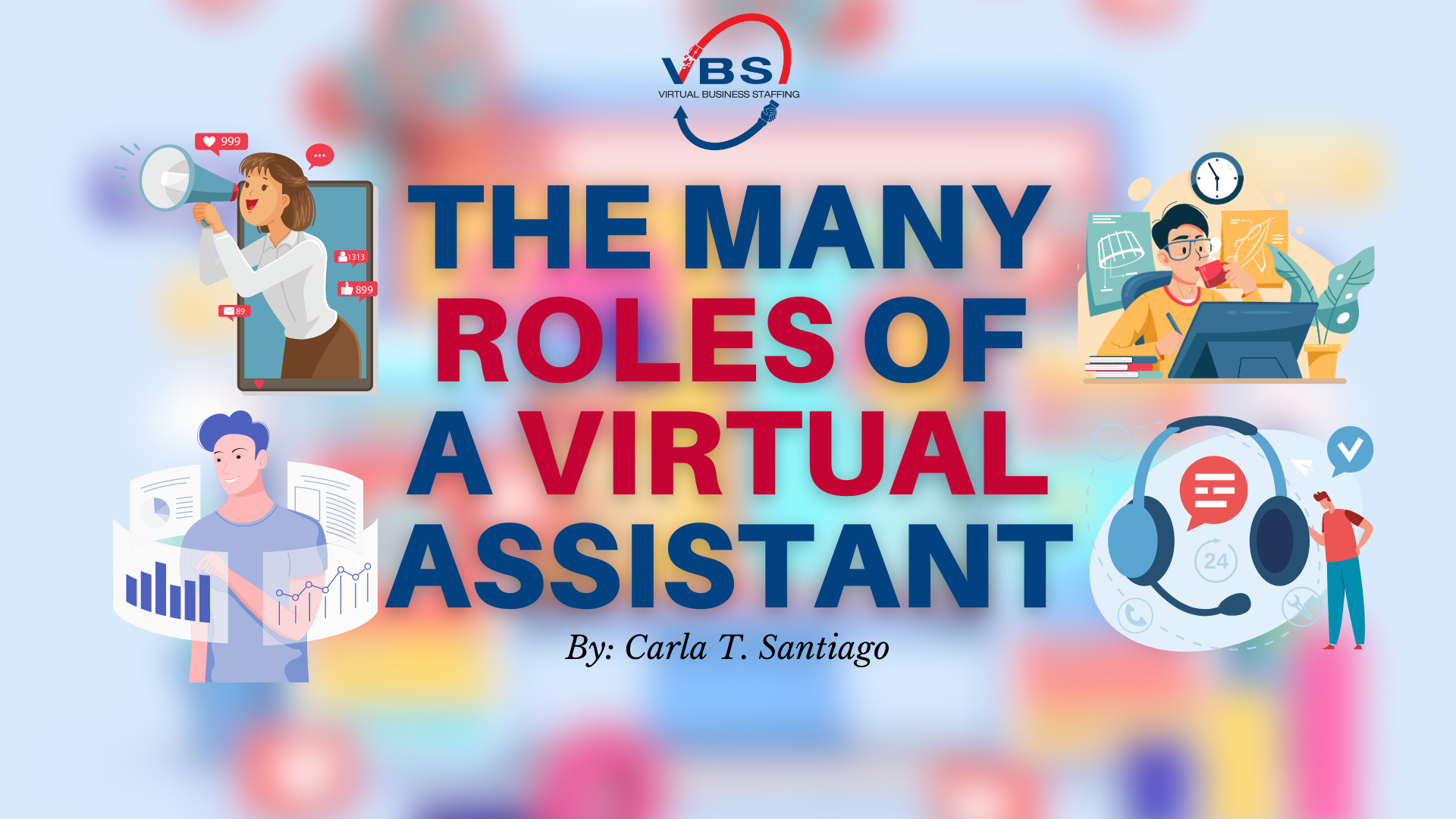
Here are seven key roles a virtual assistant can fill for your business:
1. Bookkeeper
These “number whizzes” provide precise, real-time financial data. From managing daily transactions to generating reports for strategic decision-making, virtual bookkeepers ensure your financial health is monitored. They often collaborate with accountants to keep your business’s fiscal records “clean” and audit-ready.
Best for: Business owners who are spending hours a week on financial tracking or those whose books aren’t getting the consistent attention they need to stay accurate and tax-ready.
2. Administrative Assistant
Your “go-to” person for daily operations. From scheduling high-level meetings and managing chaotic inboxes to data entry and routine reporting, they act as the gatekeepers of your workflow. Their attention to detail ensures that nothing reaches your desk without being properly vetted.
Best for: Founders and executives who are losing productive hours to inbox management, scheduling, and operational tasks that don’t require their direct expertise.
3. Medical or Corporate Scribe
Specializing in documentation, scribes take real-time notes during meetings, presentations, or patient consultations. They are responsible for maintaining accurate business, legal, or historical records, ensuring that every crucial detail is captured and archived for future use.
Best for: Healthcare providers, legal professionals, or executives in high-volume meeting environments who need documentation handled accurately in real time.
4. Social Media Manager
In the digital age, your online presence is your storefront. Social media managers handle everything from campaign strategy and content production to data analytics and community engagement across platforms like LinkedIn, Facebook, and Instagram.
Best for: Businesses that know their social media presence matters but can’t maintain consistent, quality output while also running day-to-day operations.
5. Research Analyst
A research analyst gathers and evaluates data on market trends, competitors, and financial operations. They transform raw information into actionable insights, helping you stay ahead of industry shifts and customer behavior.
Best for: Leaders making strategic decisions who need reliable data but don’t have the time or internal capacity to gather and synthesize it themselves.
6. Digital Creator
Content is king. Digital creators produce the media that defines your brand, including blog posts, graphics, videos, and images. Whether it’s for TikTok, YouTube, or your company website, they ensure your brand voice is consistent and engaging.
Best for: Brands that need a steady output of quality content but lack the in-house creative team to produce it consistently across channels.
7. Customer Service Representative
Providing top-tier support is essential for retention. Remote customer service professionals handle inquiries via phone, email, chat, and social media, resolving client issues efficiently and maintaining your brand’s reputation.
Best for: Growing businesses experiencing an increase in customer inquiries that are taking up more time than the core team can absorb without compromising response quality.
Which Virtual Assistant Role Does Your Business Actually Need?
Seven roles is a lot to consider—and for many business owners, the honest answer is: more than one. But if you’re figuring out where to start, it helps to work backwards from your biggest current pain point.
Ask yourself: Where is your time going that it shouldn’t be?
- If it’s financial tracking, reconciliation, or staying audit-ready → Bookkeeper
- If it’s inbox management, scheduling, and daily operational coordination → Administrative Assistant
- If it’s capturing and organizing meeting notes or patient records accurately → Scribe
- If it’s keeping your brand visible and active on social platforms → Social Media Manager
- If it’s making sense of market data or competitor activity → Research Analyst
- If it’s producing consistent content that represents your brand well → Digital Creator
- If it’s managing a growing volume of customer inquiries without dropping quality → Customer Service Representative
Some businesses start with one virtual assistant role and expand as they see the impact. Others come in with two or three clear needs from day one. Either approach works—what matters is starting with the right match for where your business is right now.
Not sure which role fits? That’s exactly the kind of conversation a good virtual staffing agency is built to have with you.
Why Choose Virtual Staffing?
Whether it’s for complex business operations or personal lifestyle management, like booking flights and scheduling family events, the shift toward virtual staffing is undeniable. As the workforce continues to evolve, the ability to outsource tasks to remote experts makes scaling a business easier, more affordable, and more efficient than ever before.
Why Work With a Virtual Staffing Agency Rather Than Hiring Directly?
When business owners decide to hire a virtual assistant, the next question is usually, “Do I find one myself, or do I work through an agency?”
Freelance platforms give you access to a large pool of candidates—but the vetting, interviewing, skills testing, and onboarding all fall on you. For a business owner who’s already stretched thin, that process can take weeks and still result in a hire that isn’t the right fit.
A virtual staffing agency like VBS removes that burden entirely. We pre-screen every professional we place, matching their skills and working style to the specific needs of your business. You don’t sort through applications or run test projects hoping someone performs. You have a direct conversation with our team about what you need—and we match you with a professional who’s already been assessed for exactly that role.
The result is faster onboarding, higher-quality matches, and support that actually integrates into how your business works—not someone you’re constantly managing or course-correcting.
Ready to Find the Right Virtual Assistant Role for Your Business?
You now have a clear picture of what virtual assistant roles are available, which situations each one suits best, and how the right support changes the way your business operates day to day.
The next step doesn’t have to be complicated. A single conversation with our team at VBS is enough to identify which role fits your current needs, what that support would look like in practice, and how quickly we can get the right person working alongside you.
Hiring a virtual assistant is one of the most cost-effective decisions a growing business can make. Let’s make sure you make it with the right partner.
Reach out to VBS today, and let’s find your match.